2026-08-05 15:15:17
How Hospitality Buyers Can Build Outdoor Furniture Zones That Work for Dining Waiting and Relaxing
Creating an effective outdoor teak furniture layout for hospitality spaces starts by understanding how each outdoor area will be used rather than focusing only on aesthetics. By aligning furniture selection with guest activities, staff movement, and operational needs, hotels, resorts, and restaurants can improve comfort, efficiency, and the overall guest experience.
A beautifully designed outdoor area may attract attention at first glance, but poor zoning often creates operational challenges once guests begin using the space. Dining tables placed too close to lounge seating, crowded walkways, or waiting areas without adequate seating can reduce comfort while making daily service less efficient for hospitality staff.
This article explains how hospitality buyers can organize outdoor spaces into functional zones, choose the right teak furniture for each purpose, improve guest flow, and avoid common planning mistakes before investing in furniture for commercial projects.
How to Build Outdoor Furniture Zones for Hospitality Spaces
A successful outdoor furniture layout begins with functionality rather than decoration. Before selecting furniture styles or finishes, hospitality buyers should evaluate how guests move through the space, how staff provide service, and what activities each area is expected to support.
Well-planned outdoor furniture layout for resorts and hotels helps maximize available space while creating a more enjoyable environment for visitors.
For buyers who are still defining the overall furniture direction, this practical guide to choosing teak furniture for hotels can help clarify how durability, comfort, outdoor exposure, and project requirements should influence each decision.
Start by Identifying the Main Function of Each Outdoor Area
Every outdoor space serves different operational and guest needs, making functional planning the first step in furniture selection. Identifying each zone early helps buyers choose furniture that supports both daily operations and long-term guest satisfaction.
The following sections explain how different outdoor zones require different furniture configurations.
1. Dining Area
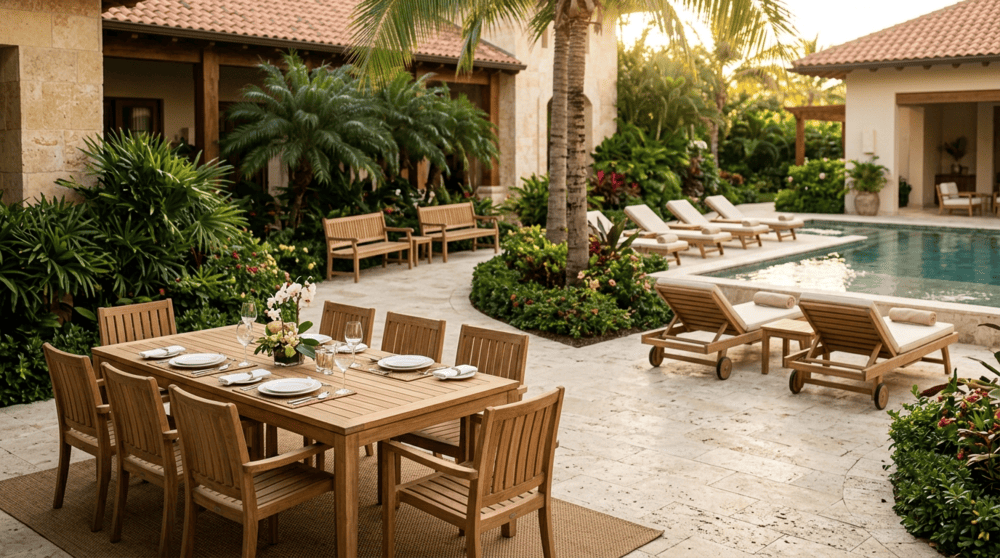
Outdoor dining spaces require stable, durable furniture that supports efficient food service and comfortable seating throughout the meal. Teak furniture for restaurant outdoor areas is widely chosen because it offers durability, timeless aesthetics, and reliable performance in commercial environments.
Tables should provide sufficient spacing for guests while allowing staff to move easily between seating rows. Fixed chairs are often preferred because they maintain a neat arrangement, require minimal repositioning, and contribute to a consistent dining layout.
2. Waiting Area
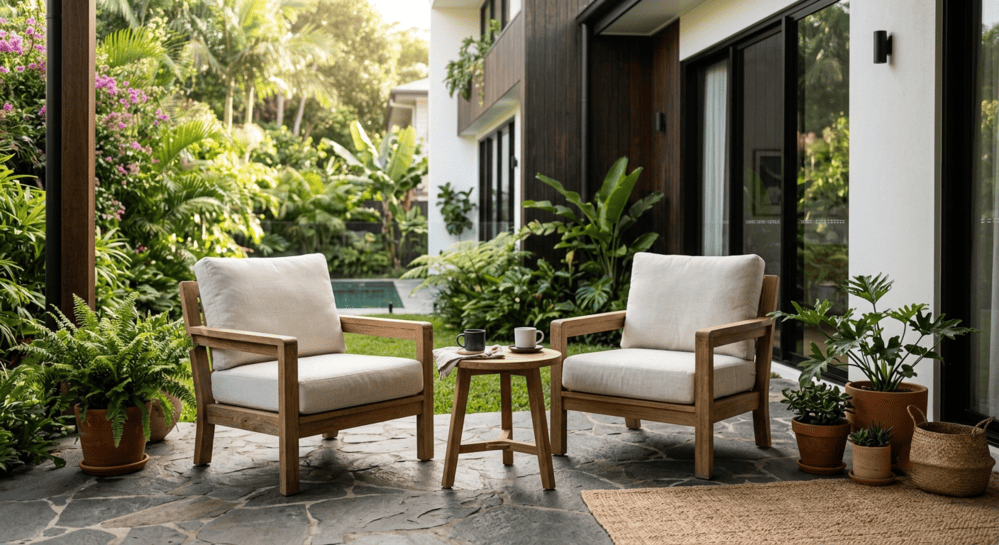
Waiting areas should create a comfortable first impression without occupying unnecessary space. Simple seating arrangements using teak benches or fixed chairs allow guests to wait comfortably while maintaining an open and welcoming atmosphere.
Unlike dining spaces, waiting areas do not require large furniture sets. Buyers should prioritize accessibility, visibility, and efficient circulation so guests can easily transition to their next destination.
3. Relaxing Area
Relaxation zones are designed for guests who intend to spend more time outdoors. Furniture such as reclining chairs, loungers, and steamer chairs provides ergonomic comfort while reinforcing a premium hospitality atmosphere.
These areas work particularly well near gardens, pools, courtyards, or scenic viewpoints where guests naturally prefer slower-paced activities. Comfortable seating encourages longer stays while enhancing the property's overall guest experience.
The table below summarizes how different outdoor functions require different furniture priorities.
| Area Type | Primary Need | Suitable Furniture |
| Dining Area | Stable seating and efficient service | Fixed chairs, extended tables, folding tables |
| Waiting Area | Comfortable short-term seating | Teak benches, fixed chairs, tree benches |
| Relaxing Area | Long-duration comfort | Reclining chairs, loungers, steamer chairs |
Separate Fast-Moving Areas from Slow-Relaxation Areas
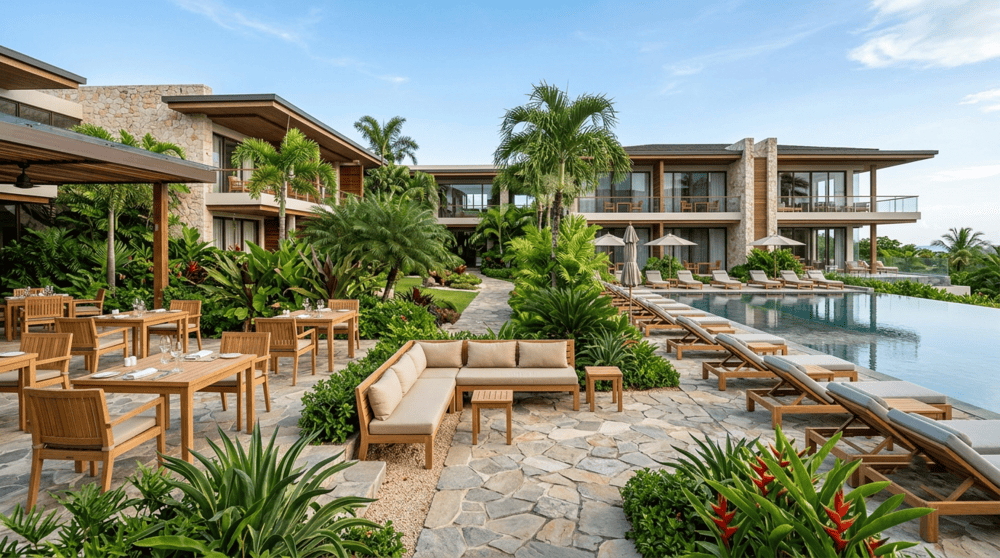
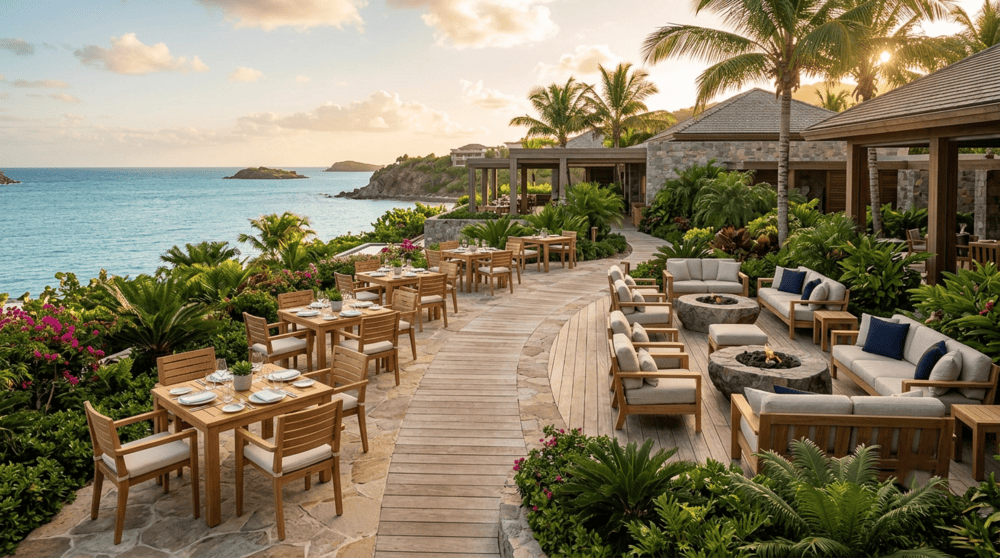
Guests use outdoor spaces differently, so high-turnover areas should be kept separate from spaces meant for relaxing. Restaurant seating outdoors, for example, usually sees frequent guest turnover and constant staff movement, while lounge areas near gardens or the pool are better suited for guests who want to sit longer, read, socialize, or simply unwind.
Separating these two types of spaces improves operational efficiency and lets guests enjoy each experience without unnecessary distractions. When these two functions overlap, service quality may decline because servers repeatedly pass through quiet seating areas, while relaxing guests experience more interruptions. Clear zoning creates a better balance between hospitality operations and guest comfort.
This is why flexible outdoor furniture layouts for hospitality spaces are useful for properties that need to adjust seating based on guest volume, events, and changing outdoor functions.
Choose Furniture Based on Guest Flow and Staff Movement
Effective furniture planning considers how people move through outdoor spaces as much as how the furniture looks. A thoughtful layout minimizes congestion, supports efficient service, and improves overall accessibility for both guests and staff.
Before deciding on furniture quantities, buyers should review walking paths, service routes, emergency access, and seating distances. Even premium teak outdoor furniture for hotels may fail to perform well if the surrounding layout limits circulation.
Several common layout challenges and their practical solutions are summarized below.
| Layout Problem | Operational Impact | Furniture Planning Solution |
| Tables placed too close together | Slower staff movement | Increase spacing between dining tables |
| Narrow walkways | Guest congestion | Create dedicated circulation paths |
| Waiting area near dining entrance | Crowding during peak hours | Separate waiting zone from dining entrance |
| Lounge seating beside busy service routes | Reduced guest comfort | Relocate relaxation area to quieter locations |
Use Benches and Tables to Create Natural Outdoor Boundaries
Outdoor spaces do not always require permanent dividers to establish different functional areas. Furniture itself can naturally define boundaries while maintaining an open, welcoming environment.
Teak benches, tree benches, and strategically positioned table sets help separate dining, waiting, and relaxation zones without blocking views or interrupting natural movement. This approach preserves the spacious feeling that many hospitality properties seek while improving spatial organization.
Compared with physical partitions, furniture-based zoning is also more flexible for seasonal adjustments, outdoor events, or future layout modifications, making it a practical solution for commercial hospitality projects.
Match Furniture Types with Hospitality Needs
Choosing furniture based solely on appearance often results in operational compromises. Instead, hospitality buyers should evaluate how each furniture type supports specific guest activities and daily business requirements.
Different commercial environments demand different seating solutions. Selecting furniture according to its intended function improves usability, maintenance efficiency, and long-term investment value.
The following sections explain how various teak furniture products serve different hospitality applications.
1. Fixed Chairs for Stable Dining Setups
Fixed chairs remain one of the most reliable choices for outdoor dining because they provide consistent seating arrangements that require minimal adjustment throughout daily operations. Their stable construction also simplifies cleaning, table alignment, and space management during busy service hours.
For restaurants and hotel dining terraces, fixed chairs contribute to a professional appearance while supporting efficient guest turnover without compromising comfort.
2. Folding Chairs for Flexible Events
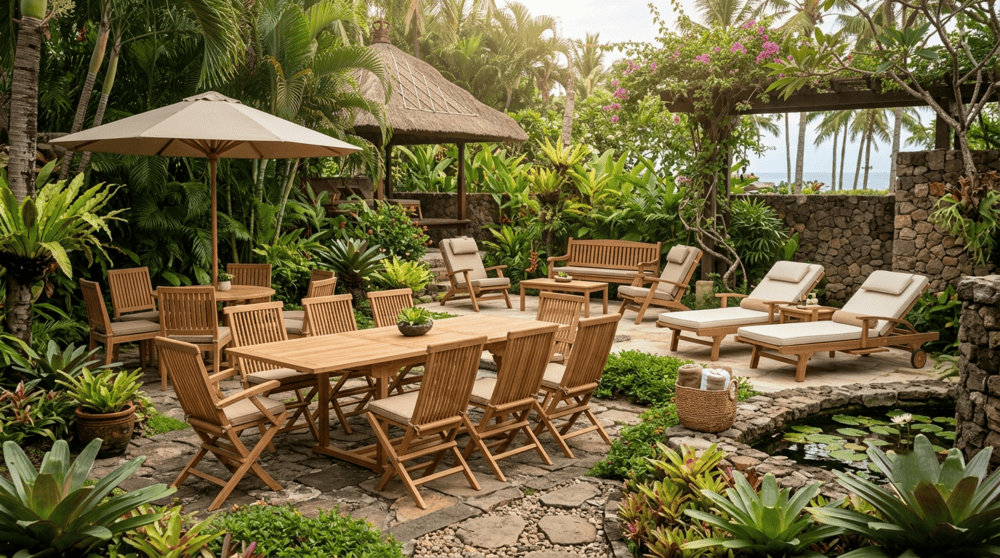
Unlike permanent dining layouts, outdoor event spaces require adaptable furniture that can quickly respond to changing guest capacities. Folding chairs provide excellent flexibility for seasonal dining, weddings, corporate gatherings, and temporary outdoor functions.
Because they are easy to store and reposition, folding chairs help hospitality operators maximize available space without investing in multiple furniture collections.
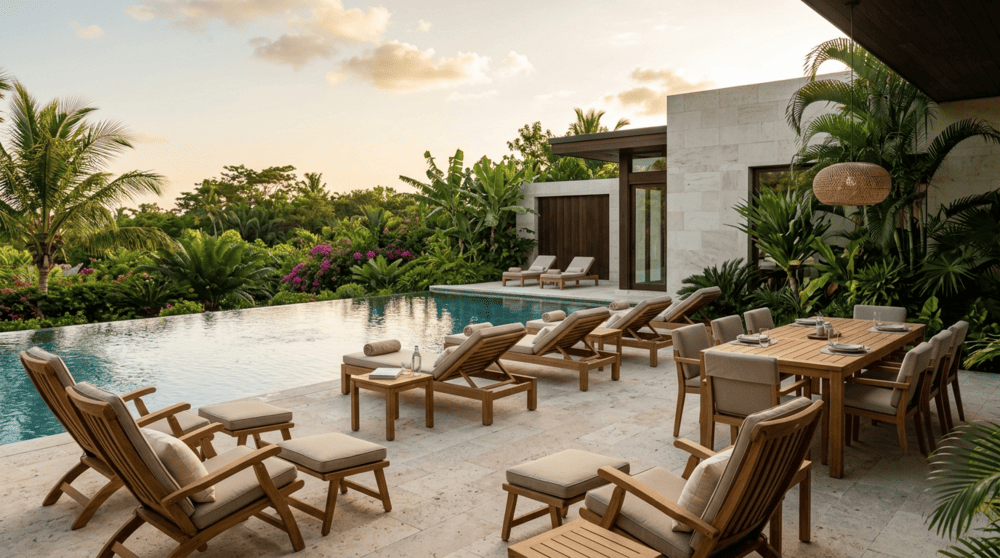
3. Loungers and Steamer Chairs for Poolside Comfort
Poolside environments prioritize relaxation rather than rapid guest turnover. Loungers and steamer chairs allow visitors to enjoy extended periods of comfort while creating the premium atmosphere commonly associated with luxury resorts.
Their ergonomic design complements outdoor leisure spaces and encourages guests to spend more time enjoying the property's amenities, ultimately enhancing perceived hospitality value.
Review the Layout Before Ordering Furniture in Bulk
Reviewing the complete outdoor layout before placing a bulk order helps buyers avoid unnecessary costs, delivery issues, and furniture that does not fit the available space. A careful evaluation ensures every piece supports operational efficiency while maintaining a cohesive appearance across the hospitality property.
Before confirming specifications, buyers should verify furniture quantities, dimensions, circulation paths, and intended functions for every outdoor zone. Spending more time during the planning stage is significantly more cost-effective than making adjustments after installation.
The checklist below highlights several important aspects that should be reviewed before purchasing teak outdoor furniture for hotels, resorts, or commercial dining spaces.
| Items to Review | Purpose | Risk if Ignored |
| Outdoor area dimensions | Ensure furniture fits the available space | Overcrowded or underutilized areas |
| Number of chairs and tables | Match expected guest capacity | Insufficient seating or unnecessary purchases |
| Guest and staff circulation | Maintain smooth movement and service | Congestion and slower operations |
| Furniture dimensions | Ensure compatibility with the layout | Furniture blocks pathways or feels disproportionate |
| Functional zoning | Assign the right furniture to each area | Guest discomfort and inefficient space utilization |
The most successful hospitality projects rarely rely on attractive furniture alone. They begin with careful planning that balances guest comfort, operational efficiency, and long-term flexibility, allowing every outdoor area to perform exactly as intended.
Before making your final purchasing decision, it is also helpful to review several common questions hospitality buyers often ask when planning outdoor furniture layouts.
FAQ About Outdoor Furniture Layout for Hospitality Spaces
Proper furniture planning often raises practical questions, especially for hotels, resorts, and restaurants managing commercial outdoor areas. The answers below address several of the most common concerns buyers have before selecting and arranging outdoor teak furniture.
1. What type of teak furniture is best for hotel outdoor dining areas?
Fixed chairs paired with sturdy teak dining tables are generally the best option because they provide stability, durability, and an organized appearance while supporting efficient restaurant operations.
2. How should hotels separate outdoor dining and relaxing areas?
Hotels should divide spaces according to guest activities. Dining areas should remain close to food service routes, while relaxing zones should be positioned in quieter locations such as gardens, poolside areas, or courtyards.
3. Are folding chairs suitable for hospitality outdoor spaces?
Yes. Folding chairs are ideal for outdoor events, seasonal dining, and spaces that require flexible seating arrangements because they can be stored and reconfigured quickly without sacrificing functionality.
4. What furniture is suitable for poolside areas in resorts?
Loungers, reclining chairs, and steamer chairs are excellent choices because they provide ergonomic comfort while reinforcing the premium atmosphere guests expect from resort environments.
5. Why should buyers review outdoor layouts before ordering furniture in bulk?
Reviewing the layout helps buyers confirm furniture quantities, circulation paths, dimensions, and functional zoning before production or delivery. This process minimizes costly revisions and ensures the furniture supports both guest comfort and operational efficiency.
Conclusion: Build Outdoor Zones That Are Comfortable, Practical, and Commercially Useful
A successful outdoor teak furniture layout for hospitality spaces begins with understanding how each area will function rather than simply selecting attractive furniture. By identifying dedicated dining, waiting, and relaxation zones, choosing furniture that matches operational needs, and reviewing guest and staff circulation before purchasing, hospitality buyers can create outdoor spaces that are both efficient and inviting.
If your priority is creating an outdoor area that supports long-term operations while delivering a premium guest experience, start with functional zoning before deciding on furniture styles. A well-planned layout not only improves daily service but also maximizes the value of every furniture investment.
Create Hospitality Outdoor Spaces That Balance Function, Comfort, and Style
Thoughtful furniture planning allows every outdoor area to serve a clear purpose while supporting a consistent hospitality experience. Instead of selecting products individually, choosing furniture as part of a complete outdoor layout helps ensure every space works together seamlessly.
For hotels, resorts, and restaurants looking to develop well-organized outdoor environments, Kusuma Furniture offers a wide selection of premium teak outdoor furniture, including benches, fixed chairs, folding chairs, extended tables, folding tables, loungers, and complete teak sets for wholesale supply and hospitality projects. With furniture designed for durability, functionality, and timeless appeal, hospitality buyers can confidently build outdoor spaces that are comfortable, practical, and commercially valuable.