2026-06-27 22:15:28
Why Hotel Projects Should Approve Furniture Samples Before Bulk Production
Hotel projects should complete a furniture sample approval before bulk production to verify dimensions, comfort, construction, finishing, hardware, functionality, and compatibility with the actual project area. The approved sample then becomes a clear production reference for the manufacturer, quality control team, contractor, designer, procurement team, and hotel owner.
Design drawings, renderings, and specification sheets can explain how a product should look, but they do not always show how the furniture feels, functions, or fits within the completed hotel area. A physical sample allows the project team to identify problems before the same mistake is repeated across dozens or hundreds of units.
This guide explains what hotel teams should evaluate during sample approval, who should participate, which documents must be retained, and when bulk production can safely begin.
What Is a Furniture Sample Approval?
Furniture sample approval is the process of inspecting, testing, revising, and formally approving one representative product before the manufacturer begins mass production.
A physical sample can be used to evaluate:
- - Actual product dimensions
- - Design proportions
- - Seating comfort
- - Construction strength
- - Finishing type and color
- - Hardware quality
- - Moving mechanisms
- - Compatibility with the interior or outdoor concept
- - Ease of handling and daily use
- - Packaging details when required
Once approved, the sample can become an approved sample or golden sample. This product serves as a physical benchmark during manufacturing, quality control, and final inspection.
The furniture production approval process should also include written documents. A sample without approved measurements, finishing codes, photographs, and revision records may still leave room for different interpretations.
Why Are Drawings and Renderings Not Enough?
Technical drawings and renderings can communicate shape, measurements, and visual intent, but they cannot fully represent comfort, stability, surface texture, actual color, weight, or the user experience.
Several issues may remain hidden in a digital design:
- - The seat may feel too high or too low.
- - The backrest may not provide enough support.
- - The armrests may not fit beneath the table.
- - Table legs may obstruct a guest’s seating position.
- - The finishing may appear different under hotel lighting.
- - The product may be too heavy for daily repositioning.
- - A chair may wobble during use.
- - Folding or reclining mechanisms may be difficult to operate.
- - The furniture may make a balcony or terrace feel crowded.
- - The design may be difficult for housekeeping staff to clean.
A product can appear well-proportioned in a rendering but feel oversized when placed on an actual balcony, poolside deck, restaurant terrace, or villa patio.
For this reason, hospitality furniture specifications should not be approved only through drawings. The physical sample should be evaluated as part of the complete guest and operational experience.
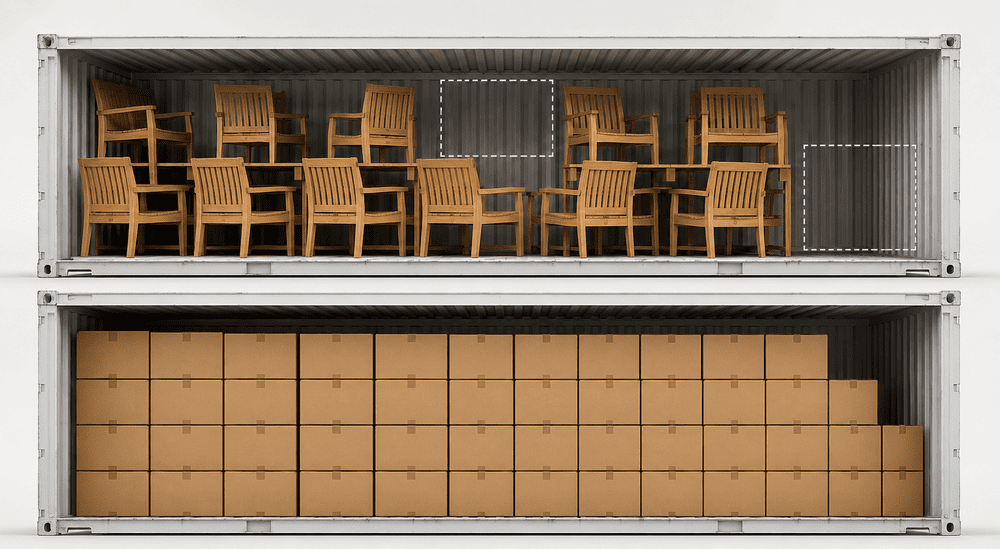
7 Reasons Hotel Projects Should Approve Furniture Samples Before Bulk Production
A physical sample helps hotel teams test whether the proposed furniture is suitable for the project before financial and scheduling risks increase. The following seven checks are particularly important for custom teak furniture for hotels and resorts.
1. Verify the Actual Product Dimensions
A sample enables the project team to compare the finished dimensions with the latest technical drawing and the actual hotel area. A difference of only a few centimetres can affect seating capacity, circulation, table spacing, and access for guests or staff.
Chair dimensions that should be checked include:
- - Overall height
- - Overall width
- - Overall depth
- - Seat height
- - Seat width
- - Seat depth
- - Armrest height
- - Backrest height
Table dimensions that should be checked include:
- - Table length
- - Table width
- - Table height
- - Tabletop thickness
- - Distance between the legs
- - Clearance beneath the table
- - Extended-table dimensions when opened
Do not measure each item only as an individual product. Place the chair and table together as a complete set.
This helps the project team confirm:
- - Whether the armrest fits beneath the tabletop
- - Whether guests have enough legroom
- - Whether the chair can be pulled out comfortably
- - Whether the seat and table heights work together
- - Whether the planned distance between tables is realistic
For example, a chair may meet its approved width, and a table may meet its approved dimensions, but the combined set can still restrict movement when the armrest, table apron, and leg positions are evaluated together.
2. Test Comfort with Different Guest Profiles
Hotel furniture will be used by guests with different heights, body proportions, ages, mobility levels, and intended activities. Comfort should therefore not be approved by only one person from the design or procurement team.
The sample should be tested for:
- - Ease of sitting down and standing up
- - Foot position while seated
- - Back support
- - Armrest position
- - Seat depth
- - Backrest angle
- - Comfort after several minutes
- - Ease of changing position
- - Suitability for older guests
- - Suitability for dining or relaxation
The following stakeholders can participate:
- - Interior designer
- - Procurement team
- - Hotel operations team
- - Food and beverage team
- - Housekeeping team
- - Project manager
- - Users with different body proportions
A timed comfort test is more useful than sitting on the product for only a few seconds. The test duration should resemble the intended activity.
For example:
- - A restaurant chair can be tested for the approximate duration of a meal.
- - A lounger can be tested in multiple reclining positions.
- - A lobby chair can be evaluated during a longer seated conversation.
- - A balcony chair can be tested together with its intended table.
Brief testing may not reveal pressure points, limited back support, an uncomfortable seat angle, or difficulty changing position.
3. Check Construction, Stability, and Joint Quality
A furniture sample allows the project team to inspect structural details that may not be visible in product drawings. This is especially important for hotel furniture that will be moved, cleaned, and used repeatedly by many guests.
Check whether:
- - Chairs remain stable on a flat surface.
- - Tables stand securely.
- - Wood joints are tight.
- - Screws and hardware are positioned correctly.
- - Armrests do not move.
- - Backrests feel secure.
- - There are no sharp edges.
- - Furniture legs are balanced.
- - No abnormal sounds occur during use.
- - The product does not shift under normal loading.
- - Frequently touched surfaces are smooth.
- - Underside components are properly finished and secured.
For knock-down or partially assembled furniture, dismantle and reassemble the sample. This confirms whether the holes, joints, fasteners, and components remain accurately aligned after handling.
Hotel operations staff should also move the product in the same way it will be handled after opening. A chair may be structurally strong but too heavy, awkward, or difficult to lift during daily cleaning and layout changes.
Some construction weaknesses are not immediately visible in a design drawing. Hotel buyers should also understand the hidden design details that can shorten the lifespan of commercial outdoor furniture.
4. Approve the Finishing Under Actual Project Lighting
Furniture finishing can look different at the factory, in a showroom, on a computer screen, and at the hotel. Natural and artificial lighting can change how the wood color, surface texture, and gloss level are perceived.
The team should inspect:
- - Wood color
- - Gloss level
- - Surface texture
- - Color consistency between components
- - Compatibility with flooring
- - Compatibility with walls
- - Compatibility with fabric and cushions
- - Appearance under sunlight
- - Appearance under evening lighting
- - Appearance when the surface is wet, when relevant for outdoor use
A practical approval process includes:
- 1. Place the sample in the intended area.
- 2. Inspect it in the morning, afternoon, and evening.
- 3. Compare it with surrounding materials.
- 4. Photograph it under different lighting conditions.
- 5. Record the approved color and gloss specification.
- 6. Retain the approved finish sample beside the physical product.
Do not approve a finish based only on a small wood chip. A color can appear different when applied across a large tabletop, bench, chair frame, or lounger.
For furniture with cushions, evaluate the teak finish together with the actual fabric. Approving both materials separately may overlook a color combination that appears unbalanced when assembled.
5. Test Every Moving and Adjustable Mechanism
Folding chairs, reclining chairs, loungers, and extended tables contain moving parts that should be tested before bulk production. A small design or hardware problem can become a major operational complaint when it appears across the complete order.
For folding chairs, check whether:
- - The chair opens and closes smoothly.
- - The mechanism locks correctly.
- - There are no obvious finger-trapping points.
- - The chair remains stable when opened.
- - Hardware does not feel loose.
- - Staff can operate the chair without excessive force.
For reclining chairs and loungers, check whether:
- - The backrest is easy to adjust.
- - Each position locks securely.
- - The mechanism is easy to reach.
- - The user does not need excessive force.
- - Moving components do not rub roughly.
- - The product remains stable at every setting.
For extended tables, check whether:
- - The extension panel opens easily.
- - The tabletop remains level.
- - Gaps between panels remain acceptable.
- - The table stays stable when extended.
- - Table legs do not obstruct users.
- - Hotel staff can understand the mechanism.
- - The extension can be closed without damaging the finish.
Ask the hotel employees who will eventually operate the furniture to test the mechanism without instructions from the manufacturer. If they cannot understand it easily, the design, labeling, or operating guide may require revision.
6. Confirm That the Furniture Fits the Actual Hotel Area
A sample should be evaluated in the actual project location or in a mock-up area that closely represents it. This confirms whether the furniture supports the function of the space rather than only looking attractive.
Relevant areas may include:
- - Outdoor restaurant
- - Poolside
- - Hotel terrace
- - Resort garden
- - Villa balcony
- - Outdoor lobby
- - Rooftop dining area
- - Spa relaxation area
- - Event courtyard
- - Private lounge
The project team should observe:
- - Guest circulation routes
- - Staff service routes
- - Distance between tables
- - Space needed to pull out chairs
- - Total seating capacity
- - Distance from doors
- - Relationship with plants and landscaping
- - Access to the swimming pool
- - Floor-cleaning access
- - Space required to move furniture
- - Emergency and accessibility routes
- - Flexibility for events or seasonal layouts
Use tape marking before the sample is positioned. This allows the team to compare the planned layout dimensions with the actual product.
For example, a layout drawing may indicate ten tables on a terrace. Once physical chairs are pulled away from the tables, the service route may become too narrow. Testing one complete furniture set can identify the problem before the entire area is furnished.
Sample placement also helps determine whether the furniture can support daily operations, private events, and layout changes without creating excessive handling work.
7. Create a Clear Production Standard for Every Stakeholder
An approved sample creates one shared reference for the hotel owner, developer, contractor, designer, procurement team, manufacturer, and quality-control inspector.
The sample can be used to verify:
- - Product shape
- - Product dimensions
- - Construction
- - Wood type
- - Finishing color
- - Gloss level
- - Hardware
- - Cushion
- - Mechanism
- - Joint details
- - Surface quality
- - Labeling
- - Packaging
Approval should always be supported by written documentation. Decisions should not rely only on verbal discussions, photographs, or informal messages.
Record the following details:
- - Product name
- - Product code
- - Sample version
- - Approval date
- - Final measurements
- - Final finishing
- - Final hardware
- - Revision list
- - Sample photographs
- - Names of approving parties
- - Approval status
- - Production tolerance
It should then be stored safely until production and inspection are complete. Without clear identification, the sample may be used, moved, repaired, or altered and may no longer provide a reliable benchmark.

What Types of Furniture Samples May Be Required?
Not every project requires the same sample format. The appropriate type depends on product customization, order value, design risk, finishing variation, and mechanism complexity.
| Sample Type | What It Shows | Best Used For |
| Material Sample | Wood type, texture, grain, and material characteristics | Early material approval |
| Finish Sample | Color, coating, texture, and gloss level | Finishing selection |
| Hardware Sample | Hinges, bolts, fittings, and operating components | Furniture with moving parts |
| Cushion Sample | Fabric, thickness, color, firmness, and comfort | Chairs and loungers with cushions |
| Prototype | Full design, dimensions, construction, and function | Custom products |
| Room Mock-Up Sample | Furniture appearance and use within one complete area | Hotel and resort projects |
| Golden Sample | Final approved standard for production and inspection | Bulk production |
A project may require several sample types. For example, a custom reclining chair may need a material sample, finishing sample, fabric sample, hardware sample, physical prototype, and final golden sample.
What Should Be Included in a Furniture Sample Approval Checklist?
A sample approval checklist should cover identity, dimensions, comfort, construction, finishing, function, project compatibility, and documentation.
Product Identity:
- - Product name and code are correct.
- - The design version has been recorded.
- - The sample matches the latest technical drawing.
- - The intended hotel area has been identified.
- - The product quantity and variation are confirmed.
Dimensions:
- - Height, width, and depth have been measured.
- - Seat height is correct.
- - Armrest and backrest dimensions are correct.
- - Table dimensions have been verified.
- - Extended dimensions have been checked where relevant.
- - Production tolerances have been recorded.
Comfort:
- - The chair has been tested by several users.
- - The backrest provides suitable support.
- - Foot and arm positions feel comfortable.
- - The seat depth supports the intended activity.
- - Reclining chairs or loungers are easy to use.
- - A timed comfort test has been conducted.
Construction:
- - The product is stable.
- - Joints are tight.
- - Hardware is installed correctly.
- - There are no sharp or loose parts.
- - Frequently handled areas feel secure..
Finishing:
- - Color has been approved.
- - Gloss level has been approved.
- - The surface feels smooth.
- - The finish works with other hotel materials.
- - The product has been checked under relevant lighting.
- - Large surfaces have been evaluated, not only small samples.
Function:
- - The folding mechanism functions correctly.
- - The reclining mechanism functions correctly.
- - The extension mechanism functions correctly.
- - The product can be moved by hotel staff.
- - Operating instructions are clear where required.
- - Hardware remains secure after repeated use.
Project Compatibility:
- - The furniture fits the approved layout.
- - Guest circulation remains clear.
- - Staff service routes remain functional.
- - Furniture can be cleaned easily.
- - Doors, lifts, stairs, and access routes are suitable.
- - The furniture supports planned layout changes.
Documentation
- - Sample photographs are available.
- - All revisions have been recorded.
- - Approving stakeholders are listed.
- - Final sample status has been confirmed.
- - Technical drawing and sample version numbers match.
- - Written production approval has been issued.
Who Should Be Involved in the Sample Approval Process?
Sample approval should involve representatives who understand design, procurement, construction, guest experience, and daily hotel operations. Procurement alone may not identify every practical issue.
1. Hotel Owner or Developer
The owner or developer confirms that the product supports the property’s positioning, quality standards, budget, and intended guest experience.
2. Interior Designer or Architect
The design team evaluates proportion, materials, color, finishing, furniture scale, and compatibility with the surrounding area.
3. Procurement Team
Procurement checks whether the sample matches the purchase order, approved specification, budget, quantity, and project schedule.
4. Project Manager
The project manager evaluates installation requirements, access, construction coordination, and the timing of delivery.
5. Hotel Operations Team
Operations staff assess usability, movement, storage, flexibility, and long-term practicality.
6. Housekeeping Team
Housekeeping evaluates cleaning access, product weight, the underside of furniture, and the ease of moving items during daily maintenance.
7. Food and Beverage Team
The food and beverage team evaluates table height, seat comfort, service clearance, guest capacity, and the ability to reposition furniture.
8. Manufacturer
The manufacturer explains construction methods, materials, production limitations, packaging, and the implications of requested revisions.
Housekeeping and operations teams are often excluded from furniture mock-up approval even though they will move, clean, store, and manage the products most frequently after the hotel opens.
A Step-by-Step Furniture Sample Approval Process
The sample approval process should move from confirmed specifications to physical testing, documented revisions, written approval, and controlled production release.
Step 1. Confirm the Technical Specification
Confirm the latest technical drawing, dimensions, material, hardware, finishing, cushion, construction, and product function before sample production begins.
The specification should also identify:
- - Product code
- - Intended location
- - Required quantity
- - Assembly format
- - Production tolerance
- - Relevant packaging requirements
Step 2. Produce the Initial Sample
The manufacturer produces the sample using the latest approved information. The sample should be clearly identified with its product name, code, and version.
Step 3. Conduct Internal Factory Inspection
Before presenting the product to the buyer, the manufacturer should inspect:
- - Dimensions
- - Stability
- - Surface quality
- - Hardware
- - Finishing
- - Mechanism operation
- - Assembly
- - General workmanship
This reduces delays caused by avoidable defects in the initial presentation sample.
Step 4. Review the Sample with the Project Team
The hotel team, designer, contractor, operations staff, and procurement representatives measure, test, and evaluate the product.
The evaluation should include:
- - Physical measurements
- - Comfort testing
- - Stability checks
- - Finishing comparison
- - Area compatibility
- - Handling and cleaning simulation
- - Mechanism operation
Step 5. Record Every Revision
Each revision must be specific and measurable.
Examples include:
- - Increase the seat height by 20 mm.
- - Reduce the gloss level.
- - Move the armrest position by 15 mm.
- - Strengthen the locking mechanism.
- - Increase the distance between the table legs.
- - Change the hardware finish.
- - Add protection beneath the chair legs.
Avoid comments such as “make it more comfortable” or “make the color slightly darker.” These instructions can be interpreted differently by each party.
Step 6. Produce a Revised Sample If Necessary
A revised sample should be produced when the requested change affects:
- - Dimensions
- - Comfort
- - Construction
- - Stability
- - Mechanism
- - Major visual proportions
- - Material combination
Minor corrections may sometimes be documented without producing a completely new item, but only when the change is clear and carries little interpretation risk.
Step 7. Issue Written Approval
Use one of the following statuses:
- - Approved
- - Approved with minor revision
- - Revision required
- - Rejected
The approval document should identify the sample version, product code, remaining actions, responsible party, and approval date.
Step 8. Keep the Approved Sample as a Production Reference
After approval, the golden sample should be stored safely and used as the main reference throughout production, finishing, assembly, quality control, packing, and pre-shipment inspection. The manufacturer and inspector should compare production units directly with this sample to confirm that the dimensions, construction, finishing, hardware, mechanisms, and overall workmanship remain consistent with the approved standard.
What Is the Difference Between Approved and Approved with Revision?
“Approved” means the sample can become the final production reference without further changes. “Approved with revision” means production may proceed only when clearly documented minor corrections are applied consistently.
1. Approved
The sample meets the agreed specifications and can be used as the final reference for production.
2. Approved with Revision
The sample is generally acceptable, but minor written changes must be incorporated into production.
3. Revision Required
The sample must be changed and evaluated again before mass production begins.
4. Rejected
The sample does not meet important design, function, construction, comfort, or project requirements.
An “approved with revision” status must include precise instructions.
Common Mistakes During Furniture Sample Approval
The most common errors occur when hotel teams rely on visual approval without testing the sample as a physical product within its intended operating environment.
1. Approving the sample through photographs only
Photographs cannot confirm comfort, stability, texture, scale, or actual finishing.
2. Not measuring the finished product
The physical sample may differ from the technical drawing.
3. Asking only one person to test the chair
Comfort can vary significantly between users.
4. Not testing the sample in the project area
Furniture scale and circulation issues may remain hidden.
5. Approving finishing only through a computer screen
Screen settings and lighting can distort color.
6. Excluding hotel operations staff
Design approval may overlook daily handling and maintenance needs.
7. Ignoring folding, reclining, or extension mechanisms
Mechanism problems may be repeated throughout the production batch.
8. Providing revisions verbally
Undocumented changes can create different interpretations.
9. Starting bulk production before revisions are complete
The manufacturer may produce units based on an outdated sample.
10. Not retaining the approved sample
Production and inspection teams lose their physical benchmark.
11. Using an outdated technical drawing
The sample and production specification may no longer match.
12. Changing specifications during production without document control
Different batches may be produced using different requirements.
What Happens If Bulk Production Starts Without Sample Approval?
Starting bulk production without physical sample approval increases the risk of repeating one design, comfort, construction, or finishing problem across the entire order.
Possible consequences include:
- - Product dimensions do not fit the area.
- - Chairs feel uncomfortable.
- - Finishing differs from the hotel concept.
- - Armrests cannot fit beneath tables.
- - Tables obstruct service routes.
- - Mechanisms are difficult to operate.
- - Products are too heavy to move.
- - Joints are unstable.
- - The complete batch requires rework.
- - Hotel opening schedules are delayed.
- - Modification costs increase.
- - Disputes arise between the buyer and manufacturer.
- - Replacement production becomes necessary.
- - Installation teams cannot complete work on schedule.
A minor error on one prototype can become a major financial problem when repeated across 100 or 500 units.
Sample cost and development time should therefore be treated as project risk-control expenses rather than unnecessary delays. Skipping this stage is one of several project-based furniture sourcing gaps that can cause rework, delays, and inconsistent results.
Should Hotels Approve Packaging Samples Too?
Hotels should approve packaging samples when furniture will travel by sea, pass through several warehouses, require on-site assembly, or be distributed to multiple project locations.
A packaging sample can be used to inspect:
- - Product position inside the carton
- - Corner protection
- - Separators between components
- - Hardware packaging
- - Product labels
- - Assembly instructions
- - Carton dimensions and weight
- - Ease of opening
- - Repacking requirements
- - Friction risk during transportation
- - Identification of individual components
- - Protection for exposed surfaces
For flat-pack and partially assembled products, conduct an unboxing and assembly test. The team should confirm that:
- - Every component is present.
- - Hardware can be found easily.
- - Components are clearly labeled.
- - Instructions follow the actual packing sequence.
- - The product can be assembled without damaging the finish.
- - The final furniture remains stable.
The sample approval process should consider whether the furniture will be delivered flat-pack, partially assembled, or fully assembled because each format creates different packaging and handling requirements. Hotel buyers can compare these considerations in the guide to flat-pack versus fully assembled teak furniture.zzzzzz
When Should Bulk Production Begin?
Bulk production should begin only after the final specification, technical drawing, materials, finishing, hardware, and physical sample have received written approval.
Before issuing the production release, confirm that:
- - All revisions have been applied.
- - The technical drawing has been updated.
- - The sample approval form has been signed.
- - The golden sample is available.
- - Materials have been confirmed.
- - The finishing code has been established.
- - Hardware has been approved.
- - The order quantity has been confirmed.
- - Production tolerances have been recorded.
- - Inspection criteria have been established.
- - Packaging requirements have been confirmed.
- - The final sample version matches the production documents.
A production deposit or deadline should not replace technical approval. Beginning production to protect the schedule may create a larger delay if the batch later requires rework.
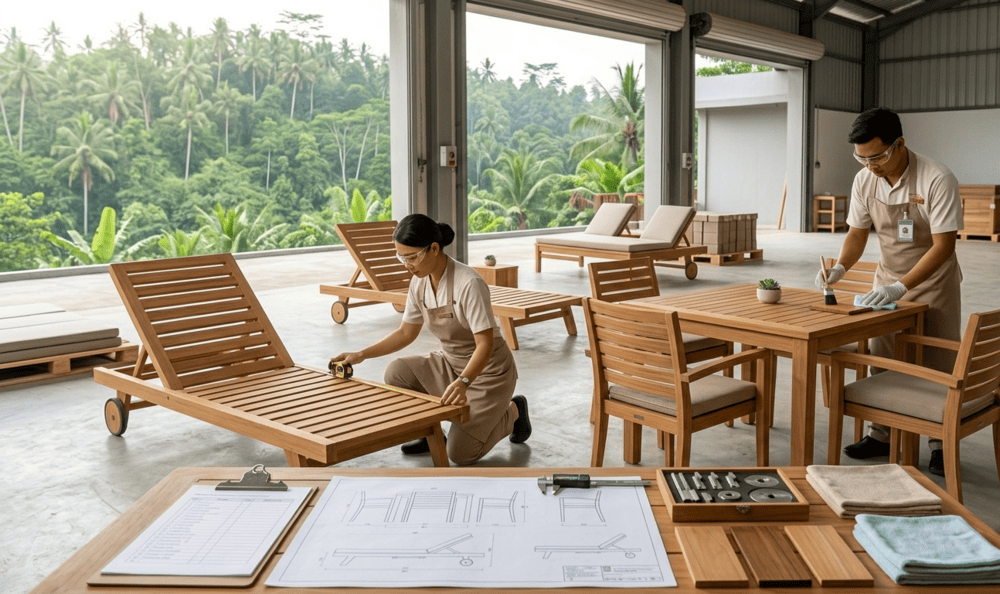
Sample Approval Documents That Hotel Buyers Should Keep
Hotel buyers should retain the complete approval record so every stakeholder works from the same specification throughout production and installation.
Documents should include:
- - Final technical drawing
- - Product specification sheet
- - Material approval
- - Finishing approval
- - Hardware approval
- - Cushion or fabric approval
- - Sample approval form
- - Revision history
- - Sample photographs and videos
- - Measurement results
- - Comfort-test notes
- - Packaging specification
- - Names of approving stakeholders
- - Production release date
- - Inspection criteria
- - Approved tolerance list
Use a version number on every technical drawing and sample approval form.
Frequently Asked Questions about urniture sample approval before bulk production
The following answers address common questions hotel owners, designers, contractors, and procurement teams ask about furniture sample approval before bulk production.
1. Is a Furniture Sample Necessary for Every Hotel Project?
A physical sample is strongly recommended for custom furniture, large orders, new designs, complex mechanisms, and projects with specific visual or operational requirements.
2. Can a Hotel Approve a Furniture Sample Through Photos and Video?
Photos and videos can support preliminary review, but they cannot fully replace physical measurement, comfort testing, finishing evaluation, stability checks, and direct mechanism testing.
3. Who Pays for the Furniture Sample?
Sample charges depend on the agreement between the buyer and manufacturer. Samples may be invoiced separately or, in some projects, credited toward the bulk order.
4. How Many Samples Should Be Approved?
The required number depends on the number of models, dimensions, finishes, mechanisms, and construction types. Each meaningfully different product should have a clear approved reference.
5. What Is a Golden Sample?
A golden sample is the final approved product used as the physical benchmark during production, quality control, packing, and pre-shipment inspection.
6. Can Bulk Production Start with Minor Revisions Pending?
Production should proceed only when minor revisions are clearly documented and do not create interpretation risk. Changes affecting dimensions, comfort, construction, stability, or mechanisms should be verified through a revised sample.
7. Should the Sample Be Tested in the Actual Hotel Area?
Yes, whenever the location is available. On-site testing helps the team evaluate dimensions, lighting, layout, circulation, cleaning access, and compatibility with surrounding materials.
8. Should Repeat Orders Use the Same Approved Sample?
A previous sample can be reused when the material, dimensions, construction, finishing, hardware, and project requirements remain unchanged. The sample must also remain in suitable condition as a reference.
Conclusion
Approving a furniture sample before bulk production helps hotel projects verify dimensions, comfort, construction, finishing, functionality, and compatibility before one design is repeated in large quantities.
Hotel teams should take five actions:
- 1. Prepare the latest technical drawing and specification sheet.
- 2. Test the sample with design, procurement, and operations teams.
- 3. Record every revision clearly and in writing.
- 4. Establish the approved product as the golden sample.
- 5. Begin bulk production only after the production release is approved.
If the product is custom, mechanically complex, or intended for a space with limited circulation, require physical testing before production. If a revision affects comfort, dimensions, construction, or function, request a revised sample rather than relying on written confirmation alone.
If the sample meets the project’s design and operational needs, issue written approval and preserve it as the production reference. If important problems remain unresolved, delay production until the sample has been corrected and re-evaluated.
Discuss Furniture Samples Before Bulk Production
Kusuma Furniture produces outdoor teak furniture for hotels, resorts, restaurants, and commercial projects, including fixed chairs, folding chairs, reclining chairs, loungers, benches, fixed tables, folding tables, extended tables, and teak sets. Buyers and project teams can discuss product specifications, prototypes, finishing, construction, packaging, and sample requirements before furniture enters bulk production.