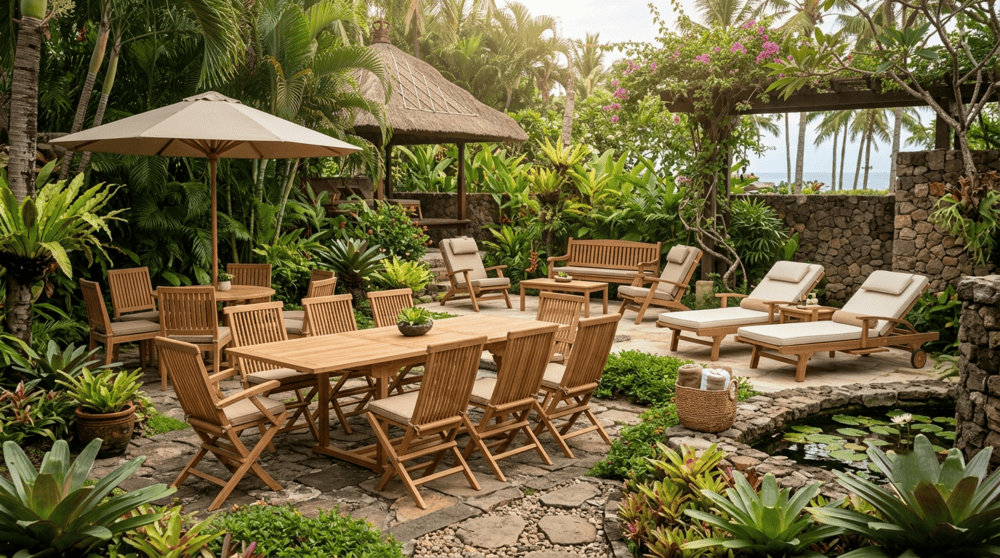
2026-06-27 20:55:24
Flat Pack vs Fully Assembled Teak Furniture Which Is Better for International Retailers
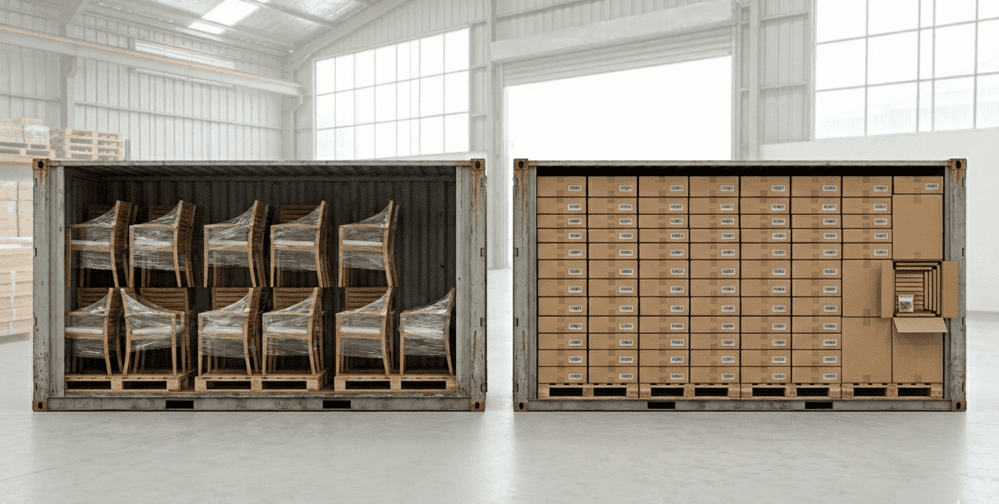
Flat-pack teak furniture is generally better for international retailers prioritizing container efficiency, compact storage, and flexible distribution. Fully assembled furniture is more suitable when products must be ready to display, factory-controlled assembly is essential, or customers do not want to assemble furniture. A hybrid assortment may offer the most practical balance.
Neither format is automatically better for every business. The right choice depends on the furniture model, shipping method, warehouse capacity, assembly resources, sales channel, customer expectations, and total cost required to make each unit ready for sale.
This guide compares flat-pack vs fully assembled teak furniture based on container capacity, landed cost, transportation risk, warehousing, assembly, customer experience, and product design. It also explains when retailers should use flat-pack, fully assembled, partially assembled, or a combination of these formats.
What Is the Difference Between Flat-Pack and Fully Assembled Teak Furniture?
Flat-pack furniture is shipped unassembled or partially assembled, while fully assembled furniture is completed at the factory and can generally be displayed or used after the packaging is removed.
The difference affects more than carton size. It also determines who performs the final assembly, how quality is checked, how much warehouse space is required, and what customers experience after receiving the product.
1. Flat-Pack Teak Furniture
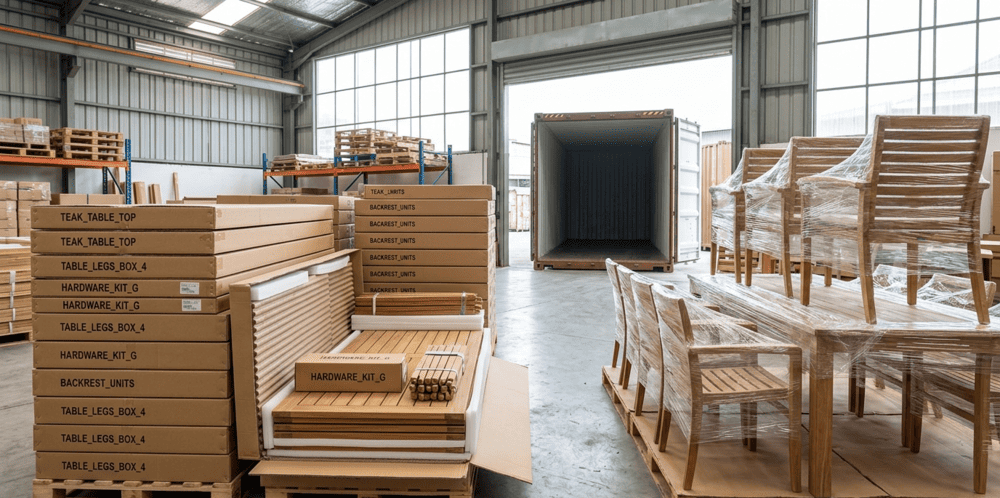
Flat-pack teak furniture is separated into several components to create a more compact shipping package. Depending on the sales model, the product may be assembled by the customer, retailer, installation technician, or local distribution partner.
Components that may be separated include:
- - Table legs
- - Tabletop
- - Chair backrest
- - Armrests
- - Main frame
- - Extension leaves
- - Bolts and other hardware
- - Decorative or functional accessories
For example, a fixed teak table may be packed with the tabletop complete and only the legs detached. This format can reduce carton dimensions without creating a complicated assembly process.
2. Fully Assembled Teak Furniture
Fully assembled furniture is constructed and inspected at the factory before packaging. Retailers typically need only to remove the protective materials, conduct a basic arrival inspection, and place the product in a showroom, storage area, or customer location.
However, fully assembled does not always mean the product requires no preparation. Some models may still require accessory installation, minor adjustment, wheel fitting, mechanism checks, or bolt tightening after transportation.
Flat-Pack vs Fully Assembled Teak Furniture at a Glance
Flat-pack usually performs better in shipping volume and warehouse density, while fully assembled furniture offers faster setup and more consistent factory assembly. The table below provides a quick comparison for international retailers.
| Comparison Area | Flat-Pack Furniture | Fully Assembled Furniture |
| Shipping Volume | More compact when the product and carton are designed efficiently | Requires more space because the complete product shape must be accommodated |
| Container Capacity | May allow more sellable units per container | Number of units is generally more limited |
| Warehouse Storage | Easier to stack, rack, and store in regular cartons | Requires a larger storage footprint |
| Assembly | Must be assembled after arrival | Already assembled at the factory |
| Quality Consistency | Depends partly on the final assembly process | Easier to control before leaving the factory |
| Damage Risk | Individual components can be protected separately | Complete structures may receive pressure during transportation |
| Customer Experience | Requires time, tools, and assembly ability | Can be used or displayed more quickly |
| After-Sales Support | Requires clear instructions and hardware support | Usually generates fewer assembly-related questions |
| Suitable Sales Channel | E-commerce, distributors, and warehouse retail | Showrooms, premium retail, hospitality, and project delivery |
| Last-Mile Delivery | Compact cartons may be easier to move | May require larger vehicles and more handling space |
| Product Returns | Can be difficult to repack correctly | Requires more space for collection and return transport |
Retailers should treat this comparison as a starting point. The most efficient choice can differ between a fixed chair, extended table, lounger, bench, and folding product.
7 Factors Retailers Should Compare Before Choosing
Retailers should compare the complete operational impact of each shipping format rather than focusing only on freight or carton size. Seven factors are particularly important when selecting teak furniture for international retail distribution.
1. Compare the Number of Sellable Units per Container
Flat-pack packaging can help retailers load more products into a container when components and cartons are designed to reduce unused space. However, container efficiency should be measured by the number of sellable units that arrive complete and undamaged—not simply by the number of cartons loaded.
Retailers should compare:
- - Carton dimensions
- - Cubic volume per carton
- - Products per carton
- - Total sellable units per container
- - Remaining unused space
- - Container weight limit
- - Carton stacking efficiency
- - Pressure between packages
- - Accessibility during unloading
- - Expected damage or missing-component rate
A very compact carton is not genuinely efficient when components frequently arrive damaged, hardware is missing, or customers cannot assemble the products correctly. Retailers planning mixed-product shipments can also review what global buyers look for when sourcing outdoor teak furniture from Indonesian manufacturers.
2. Calculate the Total Landed Cost per Sellable Unit
The purchase price and international freight are only part of the cost. Flat-pack may reduce freight and storage expenses but add labour, assembly, inspection, replacement-part, and customer-service costs.
For flat-pack teak furniture, calculate:
- - Product purchase price
- - Carton and protective packaging
- - International freight
- - Customs and administrative charges
- - Unloading and local handling
- - Warehouse storage
- - Assembly labour
- - Assembly tools
- - Post-assembly inspection
- - Lost or damaged hardware
- - Spare-component stock
- - Customer support
- - Returns and replacement shipments
- - Last-mile delivery
For fully assembled teak furniture, calculate:
- - Product purchase price
- - Larger packaging volume
- - International freight
- - Warehouse floor space
- - Handling of bulky products
- - Scratch and impact risk
- - Larger delivery vehicles
- - Two-person delivery requirements
- - Product protection during local distribution
- - Return collection costs
The format with the lowest freight cost does not necessarily provide the lowest landed cost. Retailers should calculate expenses until the product is ready to sell, display, deliver, or use.
3. Evaluate the Risk of Damage During Transportation
Flat-pack and fully assembled furniture have different damage patterns. Packaging quality, component protection, carton strength, and loading method remain essential for both formats.
Common flat-pack risks include:
- - Components rubbing against each other
- - Hardware becoming lost or mixed
- - Panels receiving excessive pressure
- - Joint holes becoming damaged
- - Incomplete component sets
- - Customers opening cartons from the wrong side
- - Protective layers moving during transportation
- - Similar components being packed under the wrong product code
Common fully assembled risks include:
- - Chair or table legs receiving pressure
- - Armrests and backrests being struck
- - Joints being stressed during handling
- - Products being difficult to move through narrow areas
- - Furniture surfaces rubbing against each other
- - Irregular product shapes creating unused container space
- - Protruding components damaging adjacent cartons
- - Large units being dropped during unloading
Besides impact and friction, moisture can affect cartons, protective materials, metal hardware, and furniture surfaces during sea freight. Container cleanliness, dryness, ventilation strategy, desiccant planning, and loading conditions should therefore be included in the teak furniture export packaging process.
Product construction also affects transportation risk. Retailers can learn more about hidden design flaws that reduce the lifespan of commercial outdoor furniture.
4. Assess Warehouse and Distribution Requirements
Flat-pack products are generally easier to store on racks or stack because their cartons have regular shapes. Fully assembled furniture requires more floor space, wider movement routes, and suitable handling equipment.
Retailers should evaluate:
- - Total warehouse area
- - Rack height and load capacity
- - Aisle width
- - Forklift or pallet-truck access
- - Number of warehouse staff
- - Picking system
- - Door and lift dimensions
- - Distribution vehicle size
- - Dedicated assembly area
- - Storage for assembled products
- - Space for damaged or returned items
- - Fire and access clearance requirements
Warehouse planning should compare storage density before and after assembly. Flat-pack stock may use less rack space, but several orders assembled simultaneously will still require a staging area.
Retailers with small warehouses should consider whether assembly activities will interfere with picking, packing, returns processing, or other inventory.
A product may save space during long-term storage but create operational delays during peak sales periods. Retailers facing space limitations may also find useful considerations in this article about flexible teak furniture for limited outdoor spaces.
5. Consider Who Will Assemble the Furniture
The success of flat-pack teak furniture depends heavily on who performs the final assembly. A product that is simple for an experienced technician may still be confusing for a first-time customer.
Retailers have four primary options.
a. Assembled by the Customer
This option may suit e-commerce businesses and customers familiar with ready-to-assemble outdoor furniture. The product must have clear instructions, accessible hardware, and a low risk of incorrect assembly.
b. Assembled by the Retailer
This option works when the retailer has technicians, workshop facilities, quality-control procedures, and enough staging space. It also allows the product to be checked before customer delivery.
c. Assembled by a Third-Party Partner
Retailers without internal technicians can use a local assembly or installation partner. Service standards, pricing, geographic coverage, and responsibility for damage should be agreed in advance.
d. Assembled at the Factory
Factory assembly is often more suitable for complicated joints, moving mechanisms, premium products, and models requiring strict alignment.
Flat-pack products should include:
- - Assembly instructions
- - Component diagram
- - Part numbers or labels
- - Hardware checklist
- - Required-tool information
- - Recommended number of people
- - Assembly sequence
- - Video tutorial
- - Customer-service contact
- - Missing-component procedure
Retailers should conduct an unboxing and assembly test with someone who was not involved in production. This reveals whether the instructions are genuinely understandable to a new user.
6. Match the Packaging Format with the Customer Experience
The shipping format should reflect what the final customer expects to receive. A low-cost flat-pack model may work well for e-commerce, while premium showroom and hospitality customers may expect immediate use.
Flat-pack is generally more suitable for customers who:
- - Purchase through e-commerce
- - Have narrow access to their property
- - Collect products using a private vehicle
- - Are comfortable assembling furniture
- - Prioritize transport convenience
- - Accept a lower-service purchasing model
- - Want a product that can be stored before use
Fully assembled furniture is generally more suitable for customers who:
- - Expect the product to be ready to use
- - Purchase from a premium showroom
- - Do not own assembly tools
- - Need rapid installation
- - Buy for hotels, restaurants, or commercial projects
- - Expect white-glove delivery
Retailers should clearly communicate the product’s assembly status on the sales page. Before completing a purchase, customers must understand whether the furniture will be delivered flat-pack, partially assembled, or fully assembled.
Retailers should also display:
- - Condition upon arrival
- - Number of cartons
- - Carton dimensions
- - Carton weight
- - Tools required
- - Recommended number of assemblers
- - Assembly time estimate
- - Assembly difficulty
- - Availability of installation service
- - Spare-part policy
- - Return conditions after assembly
For project customers, the decision may be different from consumer retail. This guide to choosing teak furniture for hotel projects explains several operational considerations for hospitality buyers.
7. Check Whether the Furniture Design Is Suitable for Repeated Assembly
Not all teak furniture is suitable for flat-pack shipping. The decision should not be based only on reducing carton volume.
A suitable flat-pack product should have:
- - Joints that are easy to align
- - Hardware designed for repeated use
- - Precisely positioned joint holes
- - Components that are easy to identify
- - Stable construction after assembly
- - Accessible fasteners
- - An assembly method that does not damage the wood
- - Replacement hardware availability
- - Limited opportunity for incorrect installation
- - Clear tightening requirements
Retailers should ask the manufacturer:
- - Has the product completed an assembly test?
- - Can it be dismantled and assembled more than once?
- - Do the joints remain stable after repeated assembly?
- - Is all hardware accessible?
- - Can components be installed in the wrong position?
- - Are special tools required?
- - Is spare hardware included?
- - Which components should not be removed?
- - Is tightening guidance provided?
- - Can damaged hardware be replaced locally?
A repeated assembly test provides valuable evidence. The product is assembled, checked, dismantled, packed, and then assembled again to evaluate joint stability and possible damage around hardware holes.
Which Teak Furniture Products Are Suitable for Flat-Pack Shipping?
There is no single packaging format that is suitable for every teak furniture category. Each model should be assessed according to its shape, construction, mechanism, size, and final installation requirements.
1. Folding Chairs and Folding Tables
Folding chairs and tables are already designed to become more compact during storage. Retailers should determine whether additional dismantling creates a meaningful improvement in container capacity.
Check whether:
- - The folding mechanism is locked for shipment.
- - Hardware cannot move during transportation.
- - The product cannot open inside the carton.
- - Moving components are protected.
- - The folded frame does not press against finished surfaces.
- - Customers can operate the mechanism safely after unpacking.
In many cases, shipping the item fully assembled but folded may provide sufficient space efficiency without introducing additional assembly work.
2. Fixed Chairs
Fixed chairs may be shipped fully assembled, semi-knock-down, or flat-pack depending on their joint design.
Retailers should compare:
- - Carton volume
- - Assembly difficulty
- - Stability after assembly
- - Risk to legs and backrests
- - Labour cost
- - Hardware accessibility
- - Customer ability
- - Quality-control requirements
A simple chair with clear bolt connections may work as a knock-down product. A model with complex joinery or strict alignment requirements may be more reliable when factory assembled.
3. Fixed Tables
Fixed tables are often shipped with the tabletop complete and the legs removed. This partially assembled format can reduce shipping volume without creating an overly complicated setup.
Make sure that:
- - Each leg position is marked.
- - All hardware is included.
- - The tabletop is protected.
- - Joint holes remain precise.
- - The table is stable after assembly.
- - Instructions specify the tightening sequence.
- - Floor levelling is checked after installation.
4. Extended Tables
Extended tables contain more complex mechanisms, so the shipping format requires careful evaluation.
Retailers should determine:
- - Whether the extension mechanism remains factory assembled
- - Whether customers only need to attach the legs
- - Whether the tabletop panels are already aligned
- - Whether assembly can affect the extension mechanism
- - Whether operating instructions are included
- - Whether the product remains level when extended
- - Whether the extension leaf is protected separately
A practical approach is to keep the extension mechanism and tabletop assembled at the factory while removing only the legs. This reduces volume while protecting alignment.
5. Reclining Chairs and Loungers
Products with reclining mechanisms, wheels, adjustable backrests, and moving sections may be safer in fully assembled or partially assembled form.
The decision should consider:
- - Mechanism complexity
- - Product dimensions
- - Protruding components
- - Ease of reinstalling hardware
- - Retailer quality-control ability
- - Safety of incorrect assembly
- - Need for factory alignment
- - Replacement-part availability
Selected components, such as wheels or detachable legs, may still be packed separately when this does not affect the primary mechanism.
6. Benches
Large benches can occupy substantial container volume. A knock-down system may be considered when the construction remains stable after assembly.
Retailers should test:
- - Seat-to-leg connections
- - Backrest alignment
- - Armrest positioning
- - Centre support
- - Hardware access
- - Stability on a flat floor
- - Packaging pressure on long components
Long panels need sufficient support inside the carton to prevent bending or surface damage.
When Is Flat-Pack Teak Furniture the Better Choice?
Flat-pack teak furniture is generally the better choice when shipping efficiency, warehouse density, and flexible distribution provide greater value than immediate product readiness.
Flat-pack may be suitable when:
- - Freight is strongly affected by shipment volume.
- - The retailer orders large quantities.
- - Warehouse space is limited.
- - Products are sold through e-commerce.
- - Customers are familiar with furniture assembly.
- - The retailer has an assembly team.
- - The product has simple and repeatable joints.
- - Spare parts and hardware are available.
- - Assembly instructions have been tested.
- - Individual cartons will be redistributed to other regions.
- - Products must pass through narrow doors, lifts, or stairways.
- - Local labour costs remain manageable.
Retailers should not select flat-pack only because it creates a smaller carton. The full process must remain practical from factory packing to customer assembly.
When Is Fully Assembled Teak Furniture the Better Choice?
Fully assembled teak furniture is generally more suitable when factory-controlled assembly, quick installation, and a ready-to-use customer experience are the main priorities.
Fully assembled products may be suitable when:
- - Products are sold through premium showrooms.
- - Customers expect immediate use.
- - Joint construction is complex.
- - Assembly consistency is essential.
- - The retailer has no technical team.
- - Products are used in hotels or restaurants.
- - Installation time at the site is limited.
- - Customer assembly errors would create safety or stability risks.
- - The product contains a special mechanism.
- - The retailer provides direct-to-location delivery.
- - The product will be displayed immediately after arrival.
- - The cost of local assembly is high.
The retailer must still plan for larger warehouse areas, careful handling, and suitable delivery vehicles.
Should Retailers Use a Hybrid Furniture Assortment?
Yes. Retailers do not need to choose one shipping format for their entire product range. A hybrid strategy allows each furniture model to use the format that best suits its construction, shipping volume, sales channel, and customer profile.
Examples include:
- - Folding chairs shipped assembled but folded
- - Fixed tables shipped with detached legs
- - Extended tables partially assembled to preserve mechanism alignment
- - Reclining chairs shipped fully assembled
- - Simple fixed chairs using knock-down construction
- - Large benches shipped partially assembled
- - Showroom stock assembled by the retailer
- - Direct customer orders shipped in flat-pack cartons
The packaging format can also differ by sales channel rather than only by product model.
One model may have two SKUs:
- - Flat-pack SKU for e-commerce and distributor orders
- - Assembled SKU for showrooms and project buyers
This strategy requires clear control over:
- - Product codes
- - Carton dimensions
- - Price differences
- - Inventory locations
- - Assembly instructions
- - Product-page descriptions
- - Replacement parts
- - Warehouse picking
- - Quality-control procedures
Without clear coding, the wrong version may be sent to a customer or mixed into the wrong distribution channel.
Flat-Pack Furniture Evaluation Checklist
A structured checklist helps retailers compare the two formats using operational and financial criteria.
| Evaluation Area | Questions Retailers Should Ask |
| Container Efficiency | How many complete and sellable units can be loaded in one container? |
| Landed Cost | What is the cost until the product is ready for sale or use? |
| Assembly | Who will assemble the product, and how long will it take? |
| Product Design | Are the joints suitable for a flat-pack system? |
| Packaging | Is every component protected, separated, and labelled? |
| Warehouse | Is there enough space for storage and assembly? |
| Customer Profile | Are customers willing and able to assemble the product? |
| Quality Control | How will the product be checked after final assembly? |
| After-Sales | Are spare hardware, instructions, and support available? |
| Returns | Can the product be repacked if it is returned? |
A decision should be made for each product family rather than applying one answer to the complete assortment.
Ask for a Packaging and Assembly Trial Before Bulk Ordering
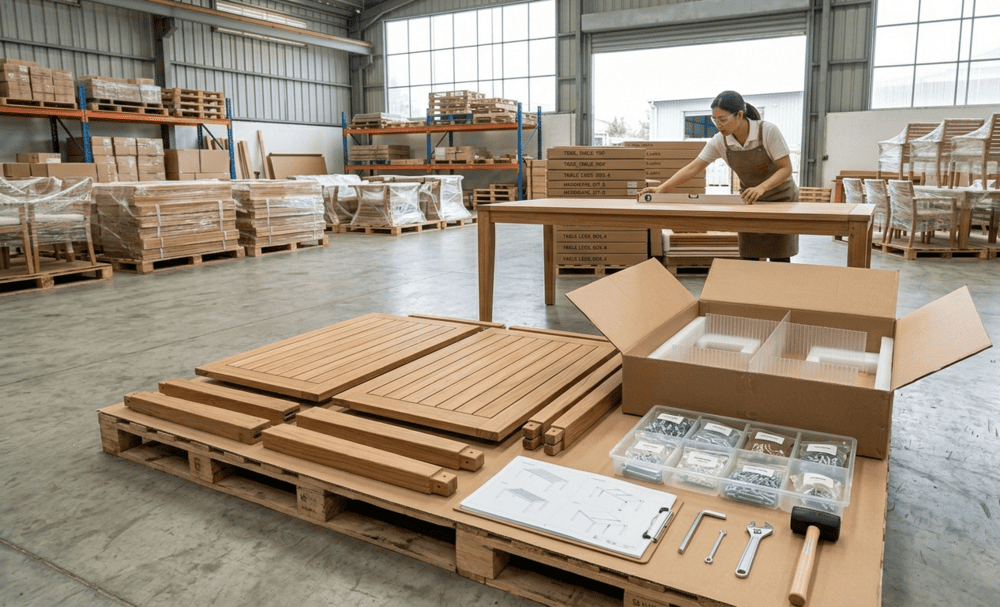
Before selecting a shipping format for a bulk order, buyers should request one or more samples for a packaging and assembly trial. The trial confirms whether the intended space savings remain practical after packing, handling, unpacking, and final installation.
The process can include:
- 1. Assemble and inspect the product at the factory.
- 2. Dismantle it according to the proposed shipping format.
- 3. Label every component.
- 4. Pack and protect each part.
- 5. Measure and weigh the carton.
- 6. Conduct a basic handling simulation.
- 7. Ask a different team to open the package.
- 8. Assemble the product using only the supplied instructions.
- 9. Record the assembly time.
- 10. Confirm all components and hardware are present.
- 11. Test product stability and function.
Buyers should not rely only on photographs of a product inside a carton. A continuous unboxing and assembly video can reveal:
- - Component order
- - Hardware accessibility
- - Confusing labels
- - Difficult opening points
- - Unprotected surfaces
- - Assembly steps that require excessive force
- - Incorrectly positioned protective materials
After deciding on the packaging format, buyers should verify product dimensions, construction, mechanisms, components, cartons, and labels through a pre-shipment inspection before approving container loading.
Retailers can also use the broader sourcing process described in this guide to wholesale teak furniture from Jepara, Indonesia.
Common Mistakes When Choosing a Furniture Shipping Format
Shipping-format decisions often fail when retailers compare only purchase price and carton size.
1. Choosing flat-pack only because the carton is smaller
A smaller carton offers limited value when assembly, damage, or customer-service costs are high.
2. Not calculating assembly costs after arrival
Labour, workshop space, tools, and inspection can significantly increase landed cost.
3. Assuming every model can use knock-down joints
Some products require factory-controlled joinery or mechanism alignment.
4. Not testing the product after dismantling and reassembly
Stability may change after joints and hardware have been used more than once.
5. Failing to provide spare hardware
One missing bolt can prevent an otherwise complete product from being sold.
6. Using assembly instructions that are too general
Instructions should match the exact product model, components, and hardware.
7. Not coding individual components
Similar legs, armrests, or supports can be installed incorrectly.
8. Ignoring the space required for assembly
Flat cartons still need a work area before products can be displayed or delivered.
9. Shipping fully assembled products without protecting protruding areas
Legs, armrests, and backrests may receive pressure or impact.
10. Not stating the assembly condition on the sales page
Customers must know what they will receive before placing an order.
11. Using one packaging format for every sales channel
E-commerce and project customers may have different service expectations.
12. Comparing freight without calculating total landed cost
The lowest freight does not always create the highest profit.
13. Ignoring return handling
Customers may not be able to repack a flat-pack product after assembly.
14. Not inspecting hardware quality
Incorrect or weak hardware can affect stability even when the teak components are well made.
How to Calculate Which Option Is More Profitable
Retailers should compare flat-pack and fully assembled products using total landed cost, expected margin, storage efficiency, return rate, and time until the product becomes sellable.
Total Landed Cost per Sellable Unit, include:
- - Product purchase price
- - Packaging cost
- - International freight
- - Local transport
- - Import duties
- - Administrative charges
- - Warehouse storage
- - Unloading and handling
- - Assembly labour
- - Tools and consumables
- - Quality inspection
- - Estimated damage
- - Estimated missing components
- - Customer support
- - Replacement parts
- - Last-mile delivery
Retailers should therefore compare:
- - Selling price
- - Gross margin
- - Inventory turnover
- - Return rate
- - Damage rate
- - Storage volume
- - Assembly time
- - Time until ready for sale
- - Customer-review impact
- - Service requirements
The most profitable format is the one that produces reliable sellable units, manageable operations, and a customer experience appropriate for the retailer’s market.
FAQ About Comparing Flat-Pack vs Full Assembled Teak Furniture
The following answers address common questions international retailers ask when comparing flat-pack, partially assembled, and fully assembled teak furniture.
1. Does Flat-Pack Teak Furniture Always Cost Less to Ship?
No. Flat-pack can reduce volume, but the final shipping cost depends on carton dimensions, total weight, number of units, loading efficiency, route, and shipping method.
2. Is Flat-Pack Teak Furniture Less Durable?
Not automatically. Durability depends on joint design, production precision, hardware quality, assembly accuracy, maintenance, and how the product is used after assembly.
3. Can Outdoor Teak Furniture Be Shipped Flat-Pack?
Yes, when its construction is designed for dismantling and reassembly without reducing stability. Not every outdoor furniture model is suitable for this format.
4. Which Format Is Better for E-Commerce Retailers?
Flat-pack is generally easier to store and distribute through e-commerce. Retailers still need clear carton dimensions, assembly instructions, spare parts, product labelling, and customer support.
5. Which Format Is Better for Hotel and Restaurant Projects?
Fully assembled or partially assembled furniture is often more practical because installation is faster and factory assembly can be checked before shipping. The final decision depends on project volume, delivery access, and installation resources.
6. What Is Partially Assembled Furniture?
Partially assembled furniture has its main structure completed at the factory, while selected components—such as legs, wheels, or armrests—are removed to reduce shipping volume.
7. Should Retailers Request Spare Hardware?
Yes. Spare hardware allows retailers to replace missing or damaged components without waiting for an international replacement shipment.
8. Can One Furniture Model Be Offered in Both Formats?
Yes, when the construction supports both options. The retailer and manufacturer should use separate product codes, packaging dimensions, prices, instructions, and warehouse records.
Conclusion
Flat-pack teak furniture is often more efficient for international retailers that need higher container capacity, compact warehousing, and flexible e-commerce distribution. Fully assembled furniture is more suitable when assembly consistency, immediate display, rapid installation, and a ready-to-use customer experience are the main priorities.
Use the following five-step decision process:
- 1. Compare the number of complete sellable units that fit in one container.
- 2. Calculate total landed cost until the product is ready for sale or use.
- 3. Determine who will perform and inspect the final assembly.
- 4. Conduct packaging, unboxing, and repeated assembly tests.
- 5. Select different formats for different products or sales channels when necessary.
If freight volume and warehouse density are the main constraints, consider flat-pack or partially assembled furniture. If the product has a complex mechanism or customers expect immediate use, choose factory-assembled delivery.
If one format does not suit the complete assortment, use a hybrid strategy. Folding products can remain assembled but folded, fixed tables can be shipped with detached legs, and reclining or extension mechanisms can remain factory assembled.
Discuss the Right Shipping Format for Your Teak Furniture Order
Kusuma Furniture produces outdoor teak furniture for retailers, distributors, and international projects, including fixed chairs, folding chairs, reclining chairs, loungers, benches, fixed tables, folding tables, extended tables, and teak sets. Buyers can discuss fully assembled, partially assembled, or knock-down formats based on product design, order volume, container capacity, warehouse operations, and destination-market requirements.