2026-06-27 18:14:50
How to Prevent Container Moisture from Damaging Teak Furniture During Export
To prevent container moisture from damaging teak furniture, exporters should ensure the furniture and packing materials are dry, inspect the container for leaks, avoid loading during rain, use proper protective packaging and desiccants, keep cargo away from container walls, and document the cargo condition before sealing the container.
Adding desiccant bags is important, but it is not enough on its own. Moisture prevention must start before the container is loaded, covering the furniture condition, warehouse storage, packing materials, container inspection, loading area, and final cargo arrangement.
For exporters, retailers, distributors, and project buyers, this process helps reduce the risk of wooden furniture moisture damage during export. It also supports better quality control when exporting teak furniture from Indonesia through sea freight.
Why Does Moisture Build Up Inside a Shipping Container?
Moisture can build up inside a shipping container because furniture, cartons, pallets, air, and dunnage may carry water vapor into the container. When temperature changes during the journey, this vapor can turn into condensation on the steel roof or walls and drip onto the cargo.
There are two common moisture risks during export shipping:
- - Water ingress: Water enters from outside through holes, damaged roofs, weak door seals, or poorly closed container doors.
- - Container condensation: Moisture already inside the container turns into water droplets due to temperature changes during transit.
These two issues should not be treated as the same problem. Water ingress requires a physical container inspection, while container condensation prevention for furniture depends on controlling moisture in the products, packaging materials, and air inside the container.
What Damage Can Container Moisture Cause to Teak Furniture?
Container moisture can affect both the furniture and its packaging. Even if the teak furniture itself is durable, poor moisture protection can still cause quality issues when the goods arrive.
Common risks include:
- - Mold appearing on the wood surface or packaging
- - Water stains on the furniture
- - Changes in finishing color
- - Cartons becoming soft or collapsing
- - Product labels peeling off or becoming unreadable
- - Metal hardware developing rust
- - Damp odor staying on the product
- - Furniture requiring cleaning or repair after arrival
- - Shipment claims, rejection, or distribution delays
This is why moisture protection for exported furniture should be handled as part of the overall export preparation process, not as a last-minute packing step.
7 Ways to Prevent Container Moisture from Damaging Teak Furniture
The most effective way to prevent moisture damage is to apply multiple layers of protection. Furniture condition, packing materials, container quality, loading conditions, and cargo arrangement all need to be checked before sealing the container.
1. Confirm That the Furniture Is Dry Before Packaging
Teak furniture should be dry and stable before it is wrapped or packed. Furniture that still contains excessive moisture can release water vapor after the container is sealed, especially when the shipment passes through different temperatures and climate zones during transit.
Before packaging, exporters should take several precautions to reduce the risk of moisture-related issues:
- - Store furniture in a dry production area or warehouse before packing.
- - Avoid packaging products immediately after exposure to rain or cleaning processes.
- - Check selected furniture components with a moisture meter when required or agreed upon with the buyer.
- - Record moisture measurement results by product model or production batch.
- - Inspect hidden areas, joints, and connection points to ensure they do not feel damp.
- - Allow the furniture to acclimate for a sufficient period before applying tight protective wrapping.
It is important to note that there is no single universal moisture-content target that applies to every shipment. The acceptable moisture level should be determined based on buyer specifications, product characteristics, destination country requirements, packaging methods, and shipping routes.
2. Keep Cartons, Pallets, and Packing Materials Dry
Furniture is not the only material that can bring moisture into a container. Cartons, pallets, foam, paper, and dunnage can also absorb water if they are stored in damp areas before use.
Packing materials should be checked carefully:
- - Cartons should not feel soft or damp.
- - Pallets should be stored in a covered area.
- - Dunnage should not be exposed to rain.
- - Plastic and foam should be clean and dry.
- - Packaging should not be placed directly on wet floors.
- - Packing materials should not have water stains or mold.
A useful buyer insight is to request moisture checks not only on the furniture, but also on pallets and dunnage. Supporting materials are often overlooked because inspection usually focuses only on the finished product.
3. Inspect the Shipping Container Before Loading
The container must be inspected inside and outside before teak furniture is loaded. This step helps ensure there are no leaks, holes, water marks, odors, or sharp objects that may damage the cargo.
Container inspection checklist:
- - Roof and walls are free from holes.
- - Doors can close tightly.
- - Rubber seals are not damaged.
- - Container floor is dry.
- - No standing water or water marks.
- - No suspicious rust trails.
- - No nails or sharp parts.
- - Interior is clean and odor-free.
- - Built-in ventilation is not blocked by dirt.
- - No remaining cargo residue from previous shipments.
A light test can be done by entering the container, closing the doors, and checking whether light enters through holes or cracks. Container condition should be checked together with the products, packaging, and shipping labels. For broader buyer preparation, this guide on sourcing wholesale teak furniture from Jepara, Indonesia can help buyers understand what to evaluate before working with an export supplier.
4. Avoid Loading Furniture During Rain or in a Wet Area
Furniture and packaging materials can absorb moisture when loading is done during rain or in a wet area. Even short exposure to water can trap moisture inside the container after the doors are closed.
Steps to reduce loading risk:
- - Check the weather forecast before scheduling loading.
- - Use a covered loading area.
- - Make sure the warehouse floor and path to the container remain dry.
- - Close the container doors when loading is temporarily stopped.
- - Do not place cartons directly on wet surfaces.
- - Delay loading if rain may reach the products.
- - Recheck the packaging before the container is sealed.
A practical rule is to create a clear stop-loading policy. Loading should stop when rain starts reaching the product area, not only after the packaging visibly becomes wet.
5. Use Protective Packaging Without Trapping Moisture
Packaging should protect teak furniture from water droplets, friction, and impact, but it should not trap moisture around damp products. Plastic wrapping that is too tight can keep water vapor close to the furniture surface during the entire journey.
Things to consider:
- - Make sure the product is completely dry before wrapping.
- - Add extra protection to corners and exposed surfaces.
- - Avoid direct contact between rough plastic and the finishing.
- - Use a breathable protective layer if suitable for the product.
- - Make sure hardware parts are protected.
- - Avoid using damp cloth, paper, or foam.
- - Adjust the wrapping system based on shipping duration and route.
Tighter packaging does not always mean safer packaging. If moisture has already been trapped inside, it may have no path to escape and can stay around the furniture surface throughout the shipment.
6. Use the Right Type and Amount of Container Desiccant
Desiccants help absorb moisture from the air during sea freight. However, they should be used as an additional layer of protection, not as a substitute for dry furniture, dry packing materials, and proper container inspection.
Factors to consider when choosing desiccants:
- - Container size.
- - Shipping duration.
- - Route and climate zone changes.
- - Type of furniture and packaging.
- - Amount of wood material inside the container.
- - Air condition during loading.
- - Absorption capacity of the desiccant product.
- - Desiccant manufacturer’s recommendation.
Placement methods may include:
- - Hanging desiccants at specified points.
- - Distributing them across several container areas.
- - Avoiding direct placement on top of the furniture.
- - Making sure the bags do not tear easily.
- - Following the manufacturer’s installation instructions.
- - Documenting the quantity and placement location.
Exporters should not use the same number of desiccant bags for every shipment. The required amount should be calculated based on product capacity, container size, cargo condition, route, and shipping duration.
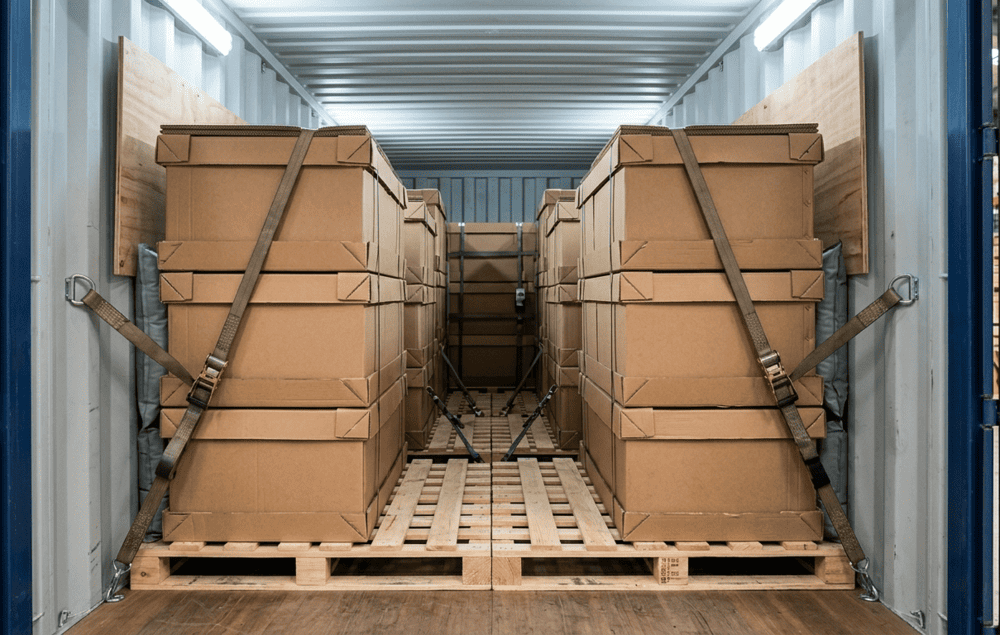
7. Keep Furniture Away from Container Walls, Roof, and Floor
Condensation often forms on steel surfaces that experience temperature changes. Because of this, furniture packaging should not touch the container walls, roof, or floor directly whenever possible.
Steps to improve cargo positioning:
- - Use dry pallets or base support.
- - Avoid placing cartons directly on the floor.
- - Leave space from container walls when possible.
- - Use top protection to help reduce dripping exposure.
- - Avoid stacking cartons too close to the roof.
- - Make sure protective layers do not affect cargo stability.
- - Fill empty spaces with suitable dry materials.
- - Make sure products do not shift during transit.
Products placed at the top layer or near the walls may face different condensation exposure than products in the center. Therefore, loading patterns should consider product position, not only container capacity.

Should Exporters Use Container Liners or Moisture-Absorbing Sheets?
Container liners or moisture-absorbing sheets can be used as additional protection to help prevent droplets from the roof or walls from reaching the packaging. However, their use should match the packaging system, cargo type, and shipping route.
Before using liners or moisture-absorbing sheets, evaluate:
- - Can the material absorb or redirect condensation?
- - Is the installation secure during transit?
- - Does the material block built-in container ventilation?
- - Does it touch the furniture surface directly?
- - Can the liner shift or fall during shipment?
- - Is the system aligned with logistics provider recommendations?
Liners should not be seen as a way to fix furniture or packaging that is already damp. They should be combined with dry products, container inspection, suitable desiccants, and proper loading conditions.
Container Moisture Prevention Checklist
A checklist helps buyers and exporters review the shipment condition quickly before container sealing. It also creates useful evidence if claims or quality issues happen after arrival.
| Inspection Area | What Should Be Checked? | Evidence to Record |
| Teak Furniture | Dry condition, surface, joints, moisture check if required | Photos and measurement results |
| Packing Materials | Cartons, pallets, foam, and dunnage are dry | Photos before use |
| Container Condition | Roof, walls, doors, seals, floor, cleanliness, and odor | Interior photos and light test |
| Loading Area | Covered area, dry floor, and no rain exposure | Photos during loading |
| Protective Packaging | Wrapping, corner protection, hardware, and top layer | Photos before and after packing |
| Desiccant | Type, quantity, capacity, and installation points | Photos of each placement |
| Cargo Stowage | Wall gap, pallet use, and cargo stability | Photos before closing doors |
| Final Condition | Seal number, door condition, and weather condition | Photos and loading report |
Packaging Considerations for Different Teak Furniture Types
Different teak furniture types require different packaging attention. Fixed chairs, folding tables, reclining chairs, loungers, and teak sets may have different moisture traps, hardware points, and contact areas during shipment.
1. Fixed Chairs and Benches
Fixed chairs and benches need protection on legs, armrests, backrest corners, and areas that touch other products during stacking. Make sure no damp packing material is placed between stacked chairs or benches.
2. Folding Chairs and Folding Tables
Folding chairs and folding tables need extra attention around the mechanism. Make sure the mechanism is dry, hardware is protected, and the product cannot open during transit.
The wrapping material should not press too tightly against the folding system. Buyers comparing compact furniture options may also find this article on durable space-saving folding teak chairs for outdoor use useful.
3. Reclining Chairs and Loungers
Reclining chairs and loungers need additional protection on hinges, wheels, reclining mechanisms, and protruding parts. Exporters should also check whether water can collect in small gaps between components.
4. Fixed and Extended Tables
Fixed and extended tables should have separate protection for tabletops, corners, legs, and extension panels. Any separator material between panels must be dry and clean.
5. Teak Furniture Sets
Teak furniture sets should be coded clearly so each component can be identified after arrival. Hardware should be packed separately, labeled, and protected from moisture.
How to Monitor Humidity During the Shipment
For high-value shipments, buyers or exporters can consider using humidity indicators or data loggers to record temperature and humidity changes during transit. These tools do not prevent moisture directly, but they help improve future export decisions.
Humidity data can help:
- - Identify when humidity increases.
- - Compare conditions between shipping routes.
- - Evaluate desiccant performance.
- - Improve packaging for future shipments.
- - Support investigation if a claim occurs.
- - Assess risk based on season and shipping duration.
A data logger helps exporters build a prevention system based on real shipment data, not assumptions. This is especially useful for recurring export orders or long-term wholesale partnerships.
Common Mistakes That Increase the Risk of Moisture Damage
Moisture problems often happen because small preparation steps are skipped. These common mistakes can increase the risk of container rain damage to wooden furniture:
- 1. Packing furniture before it is completely dry.
- 2. Storing cartons and pallets in damp areas.
- 3. Skipping the container light test.
- 4. Continuing loading during rain.
- 5. Wrapping damp products tightly in plastic.
- 6. Relying on desiccants as the only protection.
- 7. Using desiccants without calculation.
- 8. Placing cartons directly on the container floor.
- 9. Stacking packages too close to the roof or walls.
- 10. Failing to document container condition before loading.
- 11. Blocking vents without a clear moisture strategy.
- 12. Not checking packaging condition after loading is complete.
Avoiding these mistakes helps protect product quality, reduce claims, and improve trust between exporters and buyers.
What Evidence Should Buyers Request Before Container Sealing?
Buyers can request a loading report before the container is sealed. This report helps verify that furniture, packaging, container condition, and loading process have been properly prepared.
A loading report may include:
- - Photos of furniture before packing.
- - Moisture check results if included in the specification.
- - Photos of cartons, pallets, and dunnage.
- - Photos of the container floor, roof, walls, and doors.
- - Light test results.
- - Photos of weather and loading area condition.
- - Photos of desiccant installation.
- - Photos of cargo arrangement.
- - Photos of top protection layer.
- - Photos of container doors before closing.
- - Container number and seal number.
- - Loading date and completion time.
A useful documentation tip is to include the container number or loading reference in photos when possible. This helps prevent documentation from being mixed with other shipments.
FAQ About Container Moisture and Teak Furniture Export
Before approving a sea freight shipment, buyers and exporters often ask the following questions about teak furniture packaging, desiccants, and container moisture control.
1. What Is Container Rain?
Container rain is condensation that forms on the inside roof or walls of a shipping container and then drips onto the cargo.
2. Can Desiccants Completely Prevent Moisture Damage?
No. Desiccants are only one protection layer. Furniture, cartons, pallets, and dunnage must still be dry before loading.
3. Should Teak Furniture Be Completely Sealed in Plastic?
Plastic use should follow the product condition and packaging system. Tightly sealing damp furniture can trap moisture near the product surface.
4. How Many Desiccant Bags Are Needed for One Container?
The number cannot be generalized. It depends on container size, desiccant capacity, cargo volume, initial humidity, route, season, and shipping duration.
5. Can a Dry Container Still Develop Condensation?
Yes. A dry container can still develop condensation if furniture, packaging, pallets, or air entering during loading carries moisture.
6. Should Container Vents Be Closed During Furniture Export?
Container vents should not be closed or modified without considering container type, route, cargo, and logistics provider recommendations.
7. What Should Buyers Do When Furniture Arrives with Moisture Damage?
Buyers should document the container, seal, packaging, and product condition before moving the goods. Affected products should be separated, and the supplier, freight forwarder, insurer, or inspection party should be contacted.
Conclusion
Preventing container moisture damage requires more than adding desiccants before shipment. Exporters should control the moisture of furniture and packing materials, inspect the container, load cargo in dry conditions, use suitable protective packaging, and document every stage before sealing the doors.
If the main risk is condensation, focus on dry products, dry materials, correct desiccant use, and proper cargo spacing. If the main risk is leakage, prioritize container inspection, door seals, roof condition, and light testing.
In practice, exporters should follow five key steps:
- 1. Make sure the furniture and all packing materials are dry.
- 2. Check container leaks, seals, floor condition, and cleanliness.
- 3. Stop loading when rain reaches the product area.
- 4. Use suitable packaging, desiccants, and cargo arrangement.
- 5. Document the cargo condition before closing the container doors.
Discuss Export-Ready Teak Furniture Packaging with Kusuma Furniture
Kusuma Furniture produces dining set such as fixed chairs, folding chairs, reclining chairs, loungers,, benches, fixed tables, extended tables, and teak furniture sets for wholesale and international projects. Product specifications, packaging methods, and shipping preparation can be adjusted based on furniture type, order volume, and destination country. Contact us to discuss export-ready teak furniture solutions for your business needs.